
Trinity Juvenile Hall Release Routing
Trinity County Juvenile Hall and the juvenile detention function sit under a different records framework than the adult Trinity County Correctional Facility. The research identifies the operating agency as the Trinity County Probation Department, with the probation office at 333 Tom Bell Road in Weaverville. The public treatment must be a restricted-records explanation, not a juvenile release-list promise.
A juvenile release may involve a parent or guardian, counsel, probation, the juvenile court, placement, services, or court-ordered terms. Public adult-jail tools are the wrong frame. Do not expect a public juvenile release roster, public juvenile mugshot feed, or a public list of minors who left detention. The right first step is to contact Probation or work through the juvenile court process if the person asking has a lawful role in the case.
| Need | Correct route | Public adult-release route? |
|---|---|---|
| Family release or custody question | Trinity County Probation or counsel | No |
| Juvenile court order or hearing status | Juvenile court process and authorized parties | No |
| Adult jail release from Trinity County Correctional Facility | Sheriff, Records Lobby, court, VINE | Yes, for adult records subject to limits |
| CDCR or state-prison release | CIRIS, BPH, DAPO, CDCR records | No, it is a state-custody route |
Confirm Trinity Juvenile Hall Release
The release-search route for a juvenile matter starts with legal authority to ask. A parent, guardian, attorney, or party directed by the court may have a path that a member of the general public does not. The page should avoid language that invites public searching for minors. It should also avoid adult booking-photo language, since juvenile images and juvenile custody records are not public release-mugshot content.
- Identify the role of the person asking: parent, guardian, counsel, party, service provider, or other legally authorized person.
- Contact Trinity County Probation for routing, release-process questions, or supervision information when the office can lawfully respond.
- Use the juvenile court process for hearing, order, or case-status questions that Probation cannot confirm.
- Do not search adult sheriff release pages or mugshot sources for a juvenile matter.
- If the person is an adult or the event involved adult custody, switch to the Trinity County Correctional Facility route instead.
Trinity Probation Contact Card
The Trinity County Probation page is the public starting point for juvenile detention and probation context. The research also identifies the probation directory as the source for office contact details. Use Probation for proper routing, and use court process for formal juvenile case questions.
Trinity County Probation Department
333 Tom Bell Road
Weaverville, CA 96093
Phone: 530-623-1204
Fax: 530-623-1237
Hours: Monday-Friday, 9 a.m.-noon and 1 p.m.-4 p.m.
Hayfork Probation Office
154 Tule Creek Road
Hayfork Community Center
Hayfork, CA 96041
Phone: 530-628-5622 ext. 4
Trinity Juvenile Hall Function
The research describes the juvenile facility as a juvenile detention or juvenile probation function operated by Trinity County Probation. It does not support a public juvenile release page modeled on adult jail data. The correct content is narrower: explain that juvenile records are restricted, identify the agency, provide contact routing, and state that public adult rosters do not apply.
The Trinity County Probation directory is a relevant source for the office and juvenile/probation function context.
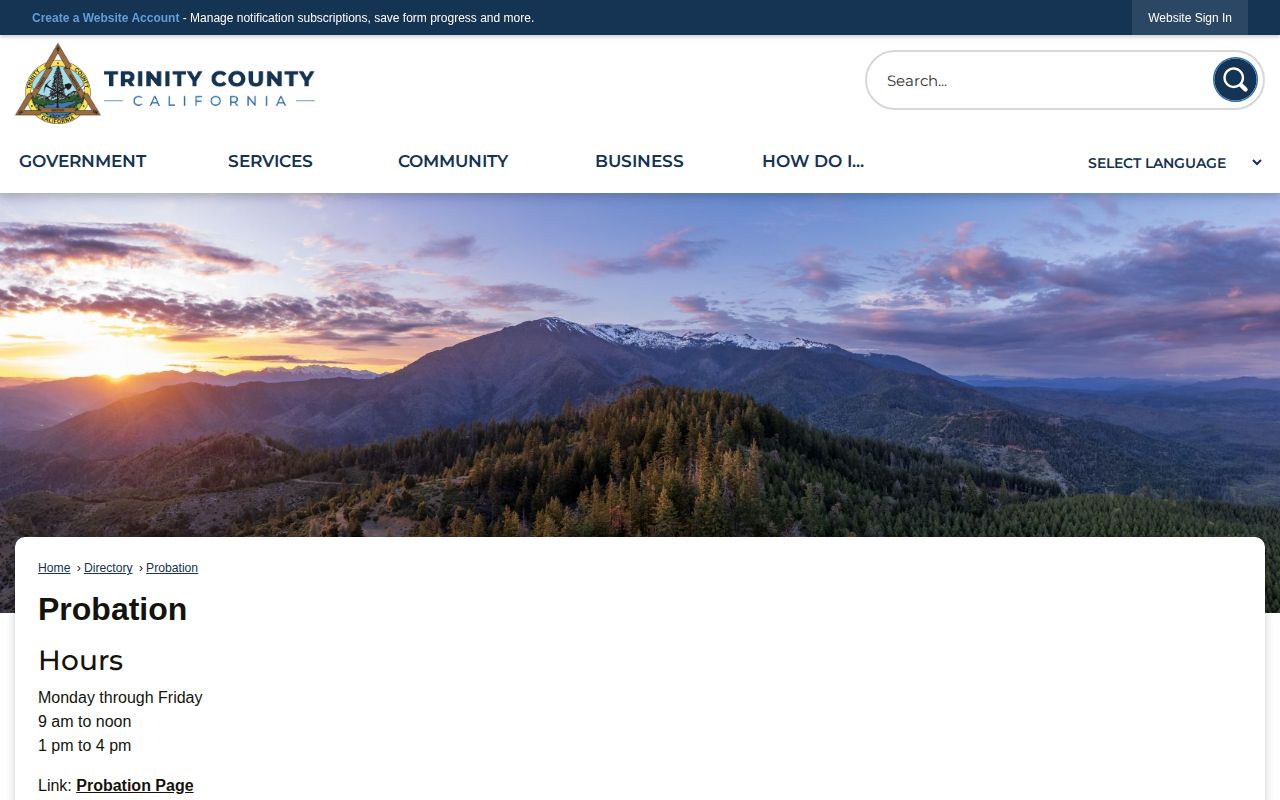
The directory context supports probation routing, but it should not be read as a public juvenile release roster or public custody-search feed.
Adult vs Juvenile Hall Release Records
Adult release research in Trinity County often starts with the Sheriff's Office because the adult jail handles local bookings. Juvenile matters do not follow that public adult-booking path. Even when a family needs release information quickly, the inquiry should be framed through Probation, counsel, or court process, not through public release lists.
California public-record language for adult arrest and release information is not a blanket rule for juvenile files. Adult records may include time and manner of release when disclosure is allowed. Juvenile records require a more limited approach because the person is a minor and the proceeding has different confidentiality rules. The safest public explanation is direct and narrow: no public juvenile release roster was identified, and the public should not expect one.
- Adult release record
- A county jail record showing when and how an adult left local custody, subject to public-record limits.
- Juvenile release information
- Restricted custody or case information routed through Probation or juvenile court channels for authorized people.
- Probation
- A court-connected supervision agency that may be involved before, during, or after a juvenile detention event.
- Placement
- A court or probation outcome that may send a youth to a setting outside a standard detention release pattern.
Trinity Juvenile Hall Record Limits
This page should not imply that juvenile mugshots, juvenile booking logs, or juvenile release histories are public search targets. If a person is seeking adult release information, the correct page is the adult Trinity County Correctional Facility route. If the person is seeking state-prison information, the correct page is the CDCR route. If the matter is juvenile, the public-facing answer is limited to agency routing and restricted-record caution.
That limitation protects accuracy. It also prevents the adult released-inmates project from blurring minors, adult detainees, and state prisoners into one search. The user intent is still valid when a parent or counsel needs to know what happened, but the public page should not promise open access where the research does not support it.
Note: if a person is now an adult but the custody event was juvenile, the juvenile-record boundary may still matter.
Trinity Release Support Context
Research for the juvenile page includes a Human Response Network community-services screenshot. Community services can be part of local orientation after a family or authorized party receives proper information through Probation or court channels. It should not be framed as a release-confirmation source. Service pages do not replace official juvenile custody communication.
The Human Response Network community services page appears in the manifest as local support context for the juvenile hall page.
The service context belongs after the record-limit explanation because the official release answer still runs through Probation, court process, or counsel.